
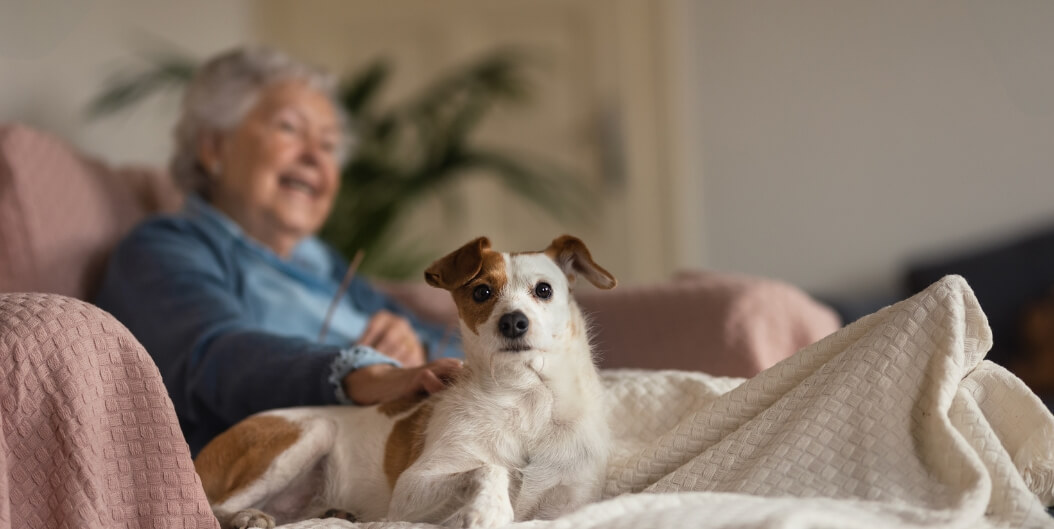
Benefits of Moving to a Memory Care Community With Pet-Friendly Policies
When your loved one is living with Alzheimer’s or another form of dementia, emotional stability can shift from day to day. Confusion, anxiety, and agitation often increase as familiar surroundings change. Moving into memory care already brings a major transition, and families frequently worry about what will feel lost in the process.
For many seniors, a pet is not just an animal but part of daily life and personal history. The presence of a familiar dog or cat can provide comfort during moments of uncertainty. In this article, we’ll look at how pet-friendly memory care communities can support emotional well-being while still maintaining safety and structure.
10 Benefits of Moving to a Pet-Friendly Memory Care Community
Pet-friendly memory care communities are structured to maintain safety while allowing residents to keep meaningful connections. For seniors with dementia, the presence of a pet can support emotional stability, routine, and comfort during cognitive decline.
1. Familiar Emotional Comfort
Even as dementia progresses, emotional memory often lasts longer than factual recall. Your loved one may not remember a caregiver’s name, but they may still respond warmly to a longtime pet. Sitting beside a familiar dog or holding a cat can reduce visible distress during moments of confusion or disorientation. The pet becomes a steady presence when other details feel uncertain.
2. Reduced Agitation
Mid-to-late stage dementia often includes restlessness, pacing, or repetitive movements. A supervised walk with a small dog or simply brushing a pet can redirect that energy. Instead of aimless movement, your loved one focuses attention on the animal. This redirection can lower agitation without requiring medication or confrontation.
3. Reinforced Daily Routine
Dementia disrupts time awareness. Feeding a pet each morning or participating in a supervised outdoor walk creates a consistent structure. Even when your loved one cannot track the calendar, repeating simple pet-related tasks at the same time each day builds rhythm and predictability.
4. Preserved Personal Identity
Many seniors have spent decades caring for animals. That role becomes part of their identity. When they move into memory care, losing a pet can feel like losing a piece of themselves. Allowing a pet to remain present helps preserve continuity and personal history.
5. Encouraged Gentle Physical Movement
Mobility often declines alongside cognitive changes. Interacting with a pet encourages natural movement, standing up to greet the animal, walking short supervised distances, or bending gently to pet them. These actions support circulation and joint flexibility without formal exercise sessions.
6. Natural Social Interaction
Pets naturally draw attention. Other residents may stop to comment or ask questions. Staff may engage in conversation while assisting with care. Instead of forced group participation, the pet becomes a bridge to communication. These small exchanges help reduce isolation in a way that feels organic.
7. Emotional Regulation During Confusion
During episodes of sundowning or late-day confusion, emotional regulation becomes harder. Sitting with a pet during these periods can help lower visible anxiety. The repetitive motion of petting and the predictable presence of the animal can offer grounding when surroundings feel overwhelming.
8. Reduced Transition Stress
Moving into memory care often causes emotional disruption. Being separated from a pet at the same time can intensify that stress. Allowing the pet to transition alongside your loved one softens the emotional shock and provides familiarity within a new environment.
9. Supervision and Safety
Pet-friendly memory care neighborhoods do not simply allow animals without guidelines. Staff monitor interactions to prevent falls, ensure proper feeding, and maintain hygiene. If your loved one forgets a feeding schedule, caregivers step in. This supervision protects both the resident and the pet.
10. Reassurance for Families
Families often worry whether their loved one feels lonely after the transition. Knowing that a trusted companion remains part of daily life offers reassurance. Seeing your loved one respond positively to a familiar pet during visits can confirm that emotional needs are still being supported.
Looking for Memory Care That Honors Both Safety and Companionship? Schedule a Visit to Pecan Point Assisted Living & Memory Care
Choosing memory care is already a difficult decision. If your loved one has shared years with a pet, that bond deserves thoughtful consideration. A pet-friendly memory care community can support emotional comfort while maintaining the structure and supervision dementia requires.
At Pecan Point Assisted Living & Memory Care, pet policies are designed with both safety and well-being in mind. Visiting the community allows you to see how routines, supervision, and companionship work together. Contact us to schedule a visit and explore how memory care here can support your loved one’s daily stability and connection.